Stop Paying Rent on Customers You Already Own
You know the commission. You've budgeted for it. But have you separated what you're paying for new customers from what you're paying to reach customers who are already yours?
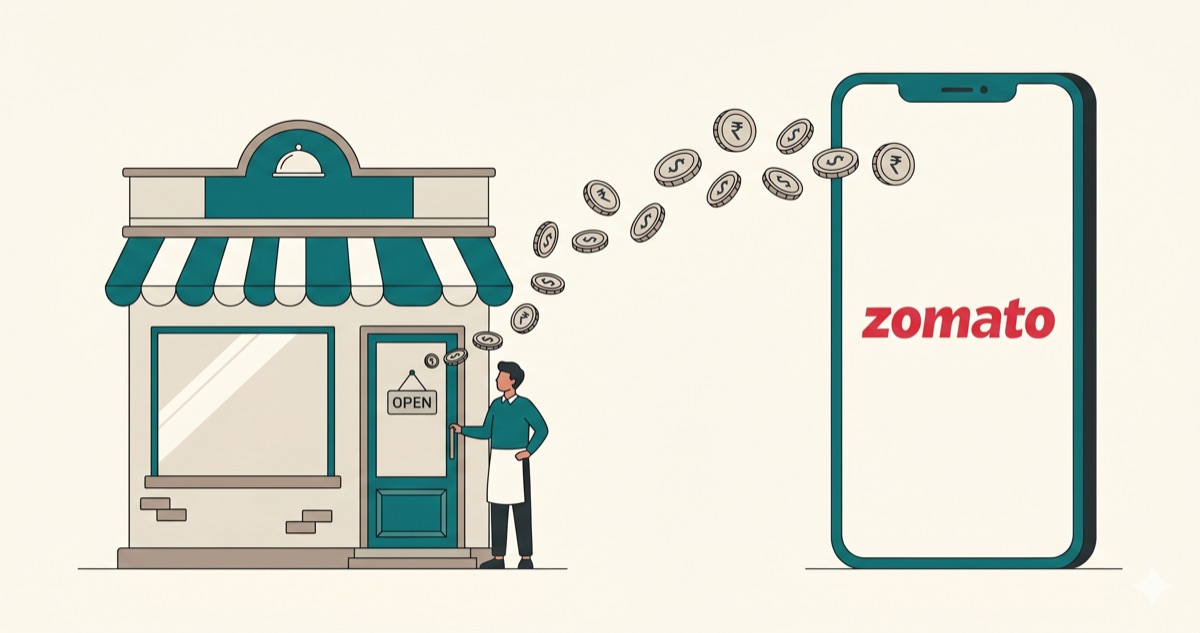
You know Zomato’s all-in take is 25-35% of every order. You’ve seen it on every invoice. You’ve budgeted for it, negotiated it, maybe even fought about it.
And at some point, you made peace with it. Aggregators bring orders. Orders pay the bills. The commission is the cost of doing business.
Except it isn’t. Not all of it.
Two types of orders, one commission rate
Think about the orders that came through Zomato last week. Some of them were genuine discovery. A customer searching “biryani near me” at 9 PM, finding you for the first time. Zomato brought you that customer. The 30% commission? That’s marketing spend. Fair enough.
But how many of those orders were from people who already know you? The regular who orders every Friday. The office group that gets lunch from you twice a week. The family that’s been coming to your outlet for two years.
These customers aren’t discovering you. They already chose you. They’re ordering through Zomato because that’s the app on their phone, not because they needed Zomato to find you.
You’re paying an all-in 30% for a customer who was already yours.
Pull a month of orders and count the phone numbers you recognise. For most established outlets, the regulars are the bulk of the volume. That part of your aggregator bill isn’t buying you new customers. It’s the rent you’re paying to stay in touch with customers you already earned.
Put a number on it
A 10-outlet restaurant, moderate volume, nothing unusual.
- Average order value: INR 500
- Aggregator orders per outlet per day: 40
- Effective all-in aggregator cost: 30%
| Per month | |
|---|---|
| Total aggregator orders | 12,000 |
| Aggregator GMV | INR 60,00,000 |
| All-in aggregator cost | INR 18,00,000 |
Now separate it. If even 60% of those orders are repeat customers, people who would have ordered from you anyway, then INR 10-11 lakh per month is going to Zomato for doing nothing except being the app your customer happens to open.
That’s not a cost of doing business. That’s a tax on your own regulars.
Why you’ve accepted it
Because until recently, there wasn’t a practical alternative. Going direct meant building an app (expensive), managing delivery (complicated), and somehow convincing customers to change their habit (hard).
So the aggregator commission became like rent. Something you pay because the alternative seemed worse.
But the alternative has changed. And this is where most restaurant owners haven’t updated their mental model.
What a direct order actually costs today
When a customer orders through your own channel, a branded app, a web link, a WhatsApp order, here’s what it costs:
| Zomato (INR 500 order) | Direct (INR 500 order) | |
|---|---|---|
| All-in aggregator cost | INR 125-175 | — |
| Payment gateway | Included | INR 10 (2%) |
| Delivery (third-party, if needed) | Included | INR 30-50 |
| Total cost | INR 125-175 | INR 40-60 |
| You keep | INR 325-375 | INR 440-460 |
Even with outsourced delivery through partners like Shadowfax or Porter, a direct order costs 8-12% of order value. An aggregator order costs 25-35%.
The gap is INR 65-135 per order. On your repeat customers, the ones who don’t need Zomato to find you, every single rupee of that gap is unnecessary.
Not by cutting quality or raising prices. Just by letting your existing customers order from you directly.
The part that matters more than commission
Commission is the cost you can see. There’s a bigger cost you’ve been absorbing without realising it.
When a customer orders through Zomato, you don’t get their phone number. You can’t message them. You can’t tell them about your new menu. You can’t remind them they have a reward waiting. You can’t wish them on their birthday. You can’t ask them to come back.
Zomato can. And Zomato does. Except the next notification might push them to your competitor who’s paying more for sponsored placement.
Your best customer had a great meal at your restaurant yesterday. Today, Zomato is the one deciding whether they see you again or try the new place down the road.
On aggregators, you rent customers. Every order is a transaction. On your own platform, you own the relationship. Every order builds something.
A restaurant that knows its customers, their names, their favourites, their order frequency, can do things an aggregator never will:
- Send a WhatsApp message: “Your usual order, 20% off this Friday?”
- Offer loyalty points that bring them back next week
- Put a wallet balance on their phone that makes your restaurant the default choice
- Notice when a regular hasn’t ordered in two weeks and win them back
That’s not a tech fantasy. Domino’s put more than 85% of its US retail sales through digital channels in 2024. McDonald’s rewards members average 26 store visits a year, against 10.5 for non-members. These are US numbers, and these brands don’t pay aggregator commissions on their regulars. They invest that money into keeping the relationship alive, and it pays back many times over.
You don’t need the scale of a McDonald’s to do this. A restaurant with strong regulars and a simple branded app with loyalty and WhatsApp can start seeing the same effect within months.
The shift that’s already underway
You’re not the only one rethinking this. The entire industry is moving:
- NRAI’s #OrderDirect campaign has been pushing member restaurants toward their own channels since 2021
- 69% of restaurants surveyed by the NRAI say they have no negotiating power on commissions, and 34% say aggregators have converted their customers into the aggregator’s customers
- The Competition Commission of India probe found Zomato and Swiggy in breach, on a complaint the NRAI filed
The infrastructure exists. Third-party delivery is available and affordable. Payment gateways are plug-and-play. WhatsApp has more than 500 million users in India. The pieces are all there.
The question isn’t whether direct ordering works. It’s whether you start now or keep paying the tax for another year.
INR 2.16 Crore
That’s the number. That’s what your restaurant hands to aggregators every year.
Some of it pays for genuine discovery. New customers who wouldn’t have found you otherwise. Keep that. Aggregators are good at acquisition.
But the rest, the commission on customers who already know your name, already love your food, and would happily order direct if you gave them a reason, that money is yours. It always was.
Every month you wait is another INR 10-11 lakh spent renting access to your own customers.
We’re building OwnOrder, a branded loyalty and ordering platform for restaurants that want to own their customer relationships. If the numbers above hit close to home, let’s talk.