The App Nobody Downloaded
Restaurants keep launching ordering apps that die within months. They solved the wrong problem.
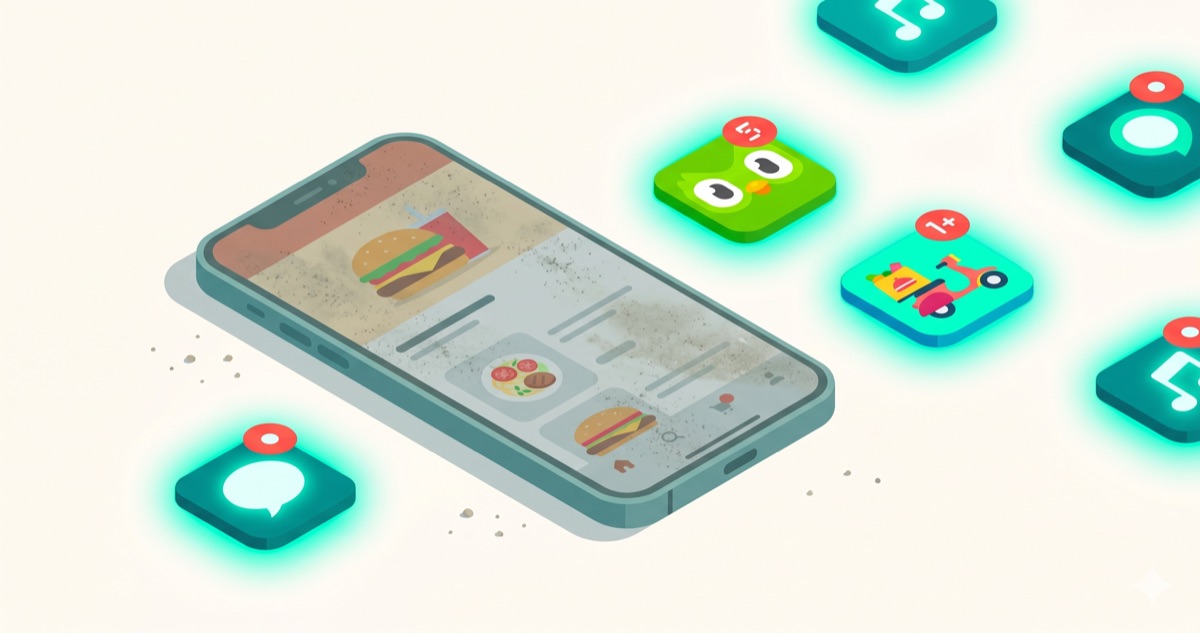
Every few months, a restaurant decides they’ve had enough of Zomato’s commissions. They hire a developer, build an ordering app, put up some posters, and wait.
A few hundred downloads. A trickle of orders. Staff forget to mention it. Customers try it once, then go back to Zomato. Within six months, the app is dead. Sitting in some folder on a phone, never opened again.
The restaurant goes back to paying 30%.
This has happened so many times that most restaurant owners now believe the conclusion: “Direct ordering doesn’t work for us. Our customers are on Zomato. We just have to live with it.”
They’re wrong. But not for the reason they think.
The problem wasn’t the app
Every failed restaurant app has the same DNA. A menu. A cart. A checkout page. Maybe a promo code for the first order.
That’s exactly what Zomato already does, except worse. Zomato has the customer’s address saved, their payment method linked, their order history remembered. It’s fast, familiar, and it works.
When a restaurant asks a customer to download a new app just to place the same order they could place on Zomato in 30 seconds, the answer is obvious. Why would they?
An ordering app without a reason to return is just a worse version of Zomato.
The app wasn’t the problem. Ordering, by itself, isn’t a reason to switch.
The wrong question
Most restaurants that attempt direct ordering start here: “How do we get customers to download our app?”
They try discounts. First-order coupons. QR codes on tables. Staff nudging customers at checkout. Some of it works briefly. A spike of downloads, a few orders, and then it fades.
The question was wrong from the start.
The right question is: “Why would a customer come back to us instead of opening Zomato?”
Download is not the hard part. Return is. A customer who downloads your app and orders once is worth almost nothing. A customer who orders every week for six months is worth everything.
That second customer doesn’t come from a better ordering screen. They come from a reason to stay.
Retention is the product
Here’s what Domino’s understood that most restaurants haven’t.
Domino’s doesn’t have a better ordering app than Zomato. Their app is functional, fast, nothing special. What they have is a reason for you to open it instead of Zomato: points on every order, rewards you’re halfway to earning, a streak you don’t want to break.
More than 85% of Domino’s US retail sales came through digital channels in 2024. Not because the app is beautiful. Because the loyalty programme makes it irrational to order anywhere else.
McDonald’s rewards members in the US average 26 store visits a year, against 10.5 for non-members. Same menu. Same prices. The difference is points, rewards, and personalised offers that keep the customer connected between visits.
These brands didn’t win by building a better ordering app. They won by making the customer’s next visit feel inevitable.
The ordering is just the vehicle. Retention is the product.
The app you did open today
Think about why you opened Duolingo this morning. Not because you woke up passionate about Spanish. Because you have a 47-day streak and breaking it feels like losing something. Because the app sent a notification that was just guilt-trippy enough to work. Because you’re 3 XP away from the next league.
Duolingo isn’t a better language app. It’s a better retention machine. Streaks, points, leagues, nudges. Every mechanic exists to answer one question: “How do we get them to come back tomorrow?”
The same mechanics work for food. The streak becomes a visit streak. The XP becomes loyalty points. The league becomes a reward tier. The push notification becomes a WhatsApp message about your expiring reward.
The psychology is identical. Give people something to protect, something to progress toward, and a nudge at the right moment.
Duolingo didn’t build a better lesson. They built a better reason to come back. That’s what your restaurant needs too.
What this looks like for a restaurant
For a restaurant with a few outlets, strong regulars, and good food, retention isn’t a complex enterprise programme. It’s three things working together.
1. Something on their phone that’s yours
A wallet balance. Points they’ve earned. A reward they’re three orders away from. Something that creates a sense of ownership: “I have INR 120 in credit at this place, I should use it.”
This is the endowment effect. Once a customer has something in your app, ordering from Zomato feels like leaving money on the table. The default shifts.
2. A nudge between visits
The gap between visits is where you lose customers. They had a great meal on Tuesday. By Saturday, they’ve forgotten. And Zomato is pushing a competitor’s sponsored ad.
A WhatsApp message closes that gap: “Your usual order, 15% off this weekend?” or “You’re 2 orders away from a free dessert.”
India has more than 500 million WhatsApp users, and it is the app your customer already has open. You don’t need them to remember your app. You need to show up where they already are.
3. A reason to choose you over the aggregator
Not “support us directly.” That’s guilt, not value. The reason needs to be selfish: “I get points here that I don’t get on Zomato. I have a balance here. The price is the same or better. And they remember what I like.”
When ordering direct is more rewarding than ordering through Zomato, the customer switches. Not because you asked them to, but because it’s the better deal.
Why previous attempts missed this
Most “direct ordering” solutions offer a menu on a website, a basic checkout flow, maybe a promo code system, maybe delivery integration.
That’s an ordering tool. It solves the transaction: getting an order from a customer to a kitchen. It doesn’t solve the relationship: giving the customer a reason to come back tomorrow, next week, next month.
Thrive positioned itself as the anti-Zomato and priced like it. It charged 3% commission against the 18-25% Zomato and Swiggy take, and it shut down in December 2024, four years after launching. Not because the idea was wrong, but because ordering without retention is a losing game. You’re competing with Zomato on convenience, and Zomato will always win that fight.
The restaurants that break free from aggregators don’t compete on convenience. They compete on relationship. That’s a game Zomato can’t play.
Zomato can never offer your customer a loyalty programme tied to your brand. They can never let your customer build a wallet balance at your restaurant. They can never send a WhatsApp from you saying “We miss you, here’s 20% off your favourite order.” Doing that would undermine their own model. They need your customer to stay Zomato’s customer, not yours.
That’s your advantage. Not a better app. A better reason to come back.
The shift that makes this possible now
Two years ago, building all of this was genuinely hard. Ordering, loyalty, WhatsApp marketing, delivery integration, multi-outlet management. You’d need a tech team, six months, and a budget most restaurants don’t have.
That’s changed.
- Third-party delivery is API-driven and affordable. Shadowfax, Porter, Pidge. A restaurant doesn’t need its own riders anymore.
- WhatsApp Business API is mature. Automated messages, order updates, marketing campaigns, all programmable.
- Payment gateways are plug-and-play. Razorpay, PayU. 2% and done.
- ONDC and #OrderDirect have normalised ordering outside aggregators. Customers are more willing to try direct channels than even a year ago.
The infrastructure exists. What’s been missing is a platform that bundles it into a single branded experience: ordering, loyalty, WhatsApp, analytics. Designed for restaurants, not enterprise giants.
The question isn’t “will customers download our app?”
They will, if there’s a reason to.
Nobody downloads an ordering app. People download an app where they have points, a balance, rewards, and offers they can’t get on Zomato. The ordering just happens to be how they use it.
Your regulars already love your food. They already come back. They just do it through Zomato because you haven’t given them a reason to come to you directly.
Give them that reason, and the app nobody downloaded becomes the app they open every week.
We’re building OwnOrder, bringing the retention playbooks of Duolingo and Starbucks to your restaurant. Not another ordering app. A retention engine with loyalty, gamification, and WhatsApp built in. If your restaurant has loyal customers but no way to keep them connected between visits, let’s talk.